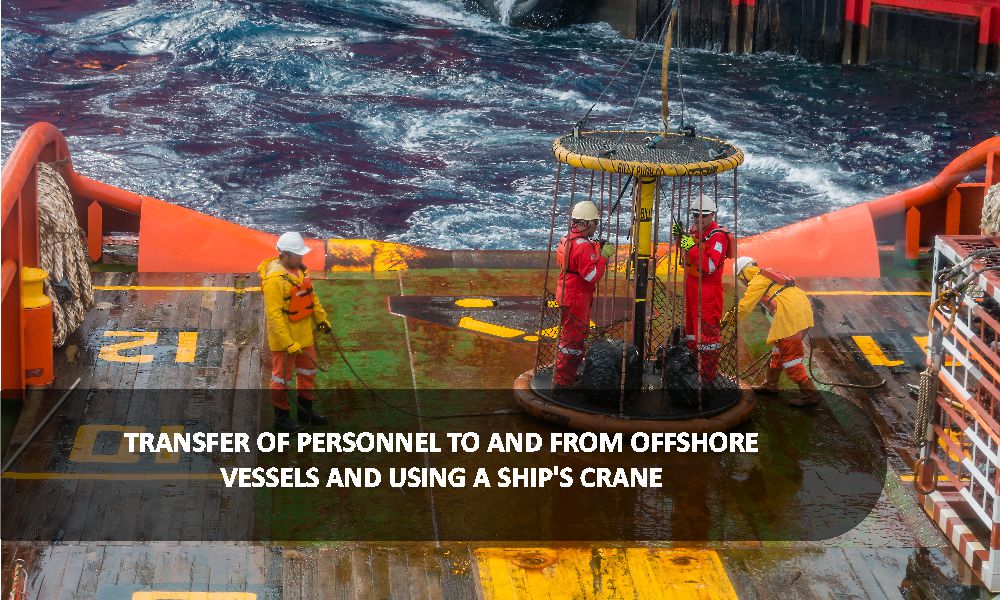
The course aims to equip maritime and offshore personnel
with the knowledge, skills, and best practices for safely transferring
personnel between vessels, offshore platforms, and other marine structures. It
focuses on minimizing risks, ensuring compliance with international safety
standards, and enhancing operational efficiency during personnel transfers.
Objectives:
By the end of this course, participants will be able to:
Understand
the Fundamentals of Personnel Transfers – Identify the risks,
challenges, and regulatory requirements for safe offshore personnel
transfers.
Recognise
Roles and Responsibilities – Define the duties of the master, crane
operator, banksman, and transferred personnel in ensuring safe transfers.
Apply
Best Practices for Safe Transfers – Implement proper procedures using
personnel baskets, cranes, gangways, and other transfer methods.
Assess
Environmental and Operational Conditions – Evaluate weather, sea
state, visibility, and vessel stability before initiating transfers.
Ensure
Compliance with Safety Equipment Requirements – Verify the use of life
vests, PPE, lifebuoys, and other life-saving equipment.
Understand
Communication Protocols – Maintain clear and effective communication
between vessels, cranes, and deck teams.
Manage
Emergency Situations – Develop response plans for incidents such as
man-overboard situations or equipment failure.
Handle
Commercial Pressures Responsibly – Ensure safety remains the top
priority despite operational or logistical demands.
Modules:
Understand
the Fundamentals of Personnel Transfers
Recognize
Roles and Responsibilities
Apply
Best Practices for Safe Transfers
Assess
Environmental and Operational Conditions
Ensure
Compliance with Safety Equipment Requirements
The course aims to equip maritime and offshore personnel
with the knowledge, skills, and best practices for safely transferring
personnel between vessels, offshore platforms, and other marine structures. It
focuses on minimizing risks, ensuring compliance with international safety
standards, and enhancing operational efficiency during personnel transfers.
Objectives:
By the end of this course, participants will be able to:
Understand
the Fundamentals of Personnel Transfers – Identify the risks,
challenges, and regulatory requirements for safe offshore personnel
transfers.
Recognise
Roles and Responsibilities – Define the duties of the master, crane
operator, banksman, and transferred personnel in ensuring safe transfers.
Apply
Best Practices for Safe Transfers – Implement proper procedures using
personnel baskets, cranes, gangways, and other transfer methods.
Assess
Environmental and Operational Conditions – Evaluate weather, sea
state, visibility, and vessel stability before initiating transfers.
Ensure
Compliance with Safety Equipment Requirements – Verify the use of life
vests, PPE, lifebuoys, and other life-saving equipment.
Understand
Communication Protocols – Maintain clear and effective communication
between vessels, cranes, and deck teams.
Manage
Emergency Situations – Develop response plans for incidents such as
man-overboard situations or equipment failure.
Handle
Commercial Pressures Responsibly – Ensure safety remains the top
priority despite operational or logistical demands.
Modules:
Understand
the Fundamentals of Personnel Transfers
Recognize
Roles and Responsibilities
Apply
Best Practices for Safe Transfers
Assess
Environmental and Operational Conditions
Ensure
Compliance with Safety Equipment Requirements